

Alternatives to Social Fetch
Social Fetch gives AI agents live social data from 20+ platforms with one API, trusted by over 3.6 million monthly lookups.
Explore 20 alternatives to Social Fetch. Compare features, pricing, and find the best fit for your needs.

JevModel
Bilingual console and guide for the jev decision model: classify, route, and score text or JSON.
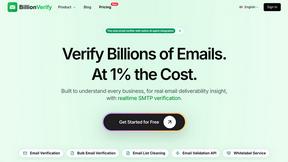
BillionVerify
BillionVerify is a professional email verification service built to solve one problem: bad email data costs businesses money.
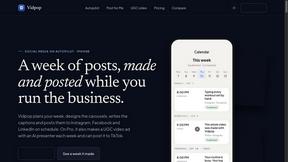
Vidpop
Vidpop plans, designs and posts three carousel posts a week for your business, with captions, and on Pro an AI-presenter UGC video ad. iPhone app.

TrackMedia
Your Social Media Content Engine That Drives Revenue. Distribute your content to every social media platform and track it in real time.

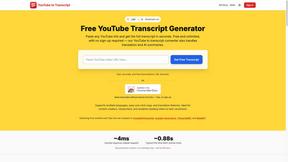
GetYouTubeTranscript
Free YouTube transcripts on the web, a Chrome extension, and an API + MCP server so AI assistants can read YouTube.

Product Launch Checklist
A free launch checklist for SaaS, apps, AI tools and more. Every step says why it matters and when you can skip it.
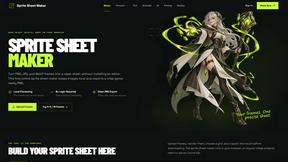
Sprite Sheet Maker
A free browser-based toolkit for creating, cutting, converting, and previewing sprite sheet animations.



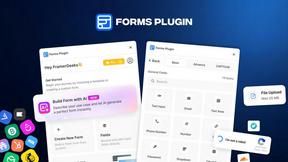
Forms Plugin
The #1 Native Form Builder Plugin for Framer - No Code, No Embeds, No External Platforms.




Qwen Image Edit
Qwen Image Edit lets creators edit and generate visuals with prompts for backgrounds, text, products, posters, outpainting, styles, and Qwen Image wor

Ideogram Studio
Create text-rich logos, posters, ads, packaging, and ecommerce visuals with Ideogram 4 AI workflows.

About Social Fetch Alternatives
Social Fetch is taking the AI development world by storm as the go-to social media API designed specifically for agents, LLMs, and automated workflows. Instead of wrestling with messy, unstructured HTML or juggling a dozen different marketplace scrapers, developers are flocking to this single, structured JSON endpoint that covers TikTok, Instagram, YouTube, and over 20 other platforms. But as with any hot tool, users start hunting for alternatives when their specific needs shift—maybe they need a different pricing model for massive scale, require deeper coverage on a niche platform, or want a self-hosted solution for compliance reasons. The search for an alternative usually comes down to balancing structured data reliability, platform breadth, cost predictability, and how easily the API integrates with your existing agent stack. When scoping out a replacement, the smart play is to look for an API that mirrors Social Fetch's core strengths: synchronous REST endpoints with typed fields, documented schemas, and that critical agent-friendly error handling where a 200 status code doesn't trick you into thinking data exists. You want something that offers shared error envelopes with request IDs, explicit lookup statuses, and predictable Result types for error handling in your code. Also, check for parallel request capabilities without throttling, pay-as-you-go scaling, and whether they provide a hosted MCP server for tools like Cursor and Claude. The best alternatives will let you scrape profiles, posts, comments, transcripts, and ad library data without forcing you to rebuild your infrastructure from scratch.
FAQs about Social Fetch Alternatives
What is Social Fetch?
Social Fetch is an AI social data API and scraper API optimized for agent workflows, returning structured JSON instead of raw HTML. It provides synchronous REST endpoints with typed fields, documented schemas, and a hosted MCP server so tools like Cursor, Claude, and custom agents can scrape live social media profiles, posts, and search results reliably. The platform covers over 20 platforms including TikTok, Instagram, and YouTube, and is designed as a single integration for all social data needs.
Who is Social Fetch for?
Social Fetch is built for AI agents, LLM products, and developers who need to programmatically access social media data without maintaining scraper infrastructure. It is ideal for products that prompt agents to look up creators, perform competitive research, or gather engagement metrics. The API is accessible to humans via cURL, Python, Node, and quickstart docs, but its core design is agent-friendly with shared error envelopes, explicit lookup statuses, and OpenAPI hints for empty or ambiguous results.
Is Social Fetch free?
Social Fetch offers a free starting point with 100 free credits for new users to test the platform. After that, it operates on a pay-as-you-go scaling model, allowing you to pay only for what you use. The service supports parallel requests without throttling, making it cost-effective for both small experiments and large-scale production workloads.
What are the main features of Social Fetch?
Social Fetch provides profile scraping, post metadata, comment scraping, engagement metrics, YouTube and TikTok transcripts, hashtag API search, keyword search, and competitive ad-library queries across 20+ platforms. It includes a TypeScript SDK with Result types for predictable error handling, a hosted MCP server for agent integration, and OpenAPI schemas for clear documentation. The API is designed to return structured JSON with typed fields, and it handles ambiguous results gracefully with explicit lookupStatus fields so a 200 HTTP response never falsely indicates found data.