
Tuning Engines
Tuning Engines gives organizations one control plane to govern, observe, and measure software agents and robots as a managed workforce.
Visit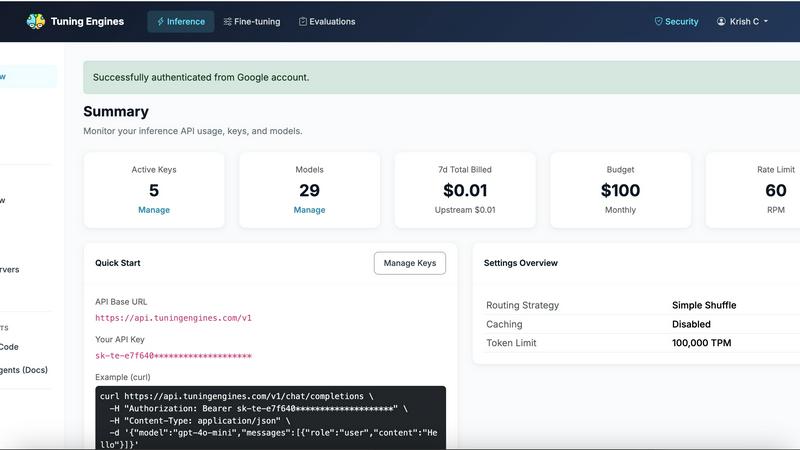
About Tuning Engines
Tuning Engines is built around the idea that software agents and robots need operational ownership. It provides a shared place to register workers, issue credentials, define scopes and tasks, supervise activity, and keep activity records. This can help enterprise teams coordinate governance across autonomous software that calls tools and robots that perform work in physical environments.
The product separates observation from inline enforcement. Sidecar mode collects traces and telemetry out of band, without changing traffic, and is described as the current approach for robots. Proxy mode puts software-agent calls through an OpenAI-compatible endpoint so the system can check policies, request approvals, route models, and enforce per-request budget caps before execution. The page says robot runtime security and compliance is coming soon, so the two worker types do not yet have the same stated enforcement path.
Tuning Engines also describes evaluations, datasets, and model improvement, alongside reporting that attributes spend to workers, teams, and business outcomes. It may suit organizations that want to manage AI activity as an operational cost and risk. No clear public price is listed.
Features of Tuning Engines
- Onboarding and credentialing for software agents and physical robots.
- Policy checks, scoped access, approvals, and evidence capture.
- Sidecar telemetry and proxy enforcement for software-agent traffic.
- Cost reporting by worker, team, task, session, and observed outcome.
Use Cases of Tuning Engines
- Assign owners and task boundaries to a growing AI workforce.
- Capture evidence of agent actions for security and compliance reviews.
- Observe robot fleets without changing their traffic path.
- Compare AI spend with the outcomes produced by work sessions.
Frequently Asked Questions
How does Tuning Engines define an AI workforce?
It includes non-human workers acting on an organization's behalf, such as software agents and embodied robots.
Which mode provides inline enforcement?
Proxy mode routes software-agent calls through the control plane for policy checks, approvals, routing, and budget caps. Sidecar mode is out of band.
What is available for robot oversight?
The page describes sidecar telemetry as current and robot runtime security and compliance as coming soon.
Similar to Tuning Engines
Orbi
Orbi turns labeled GitHub Issues into reviewed pull requests and tagged releases, with self-hosted and managed cloud options for software teams.
Ardelia
Ardelia brings free calculators, planners, and templates together to help people move from everyday work questions to practical next steps.
Testsy
Testsy checks AI-built web and mobile products with independent user-flow runs, replays, observed values and prompts for fixing failures.

Leadmatically
Leadmatically helps small businesses spot buyer requests on five social platforms and manage first outreach and replies from one inbox.
GigUp
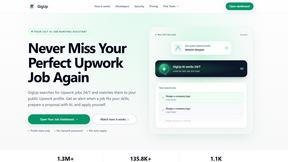
GigUp helps Upwork freelancers spot relevant new jobs through profile based matching, alerts, and proposal drafts that they review before applying.

Ragdom Venture
Ragdom Venture develops custom business software, apps and AI workflows, pairing tailored delivery with a clearly scoped project process.

FloatText
FloatText is an Android floating clipboard that keeps multiple text items above other apps for quick, sequential copying and pasting.
DataLens
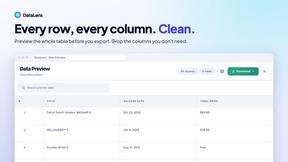
DataLens is a Chrome and Edge extension that turns visible web page data into exportable tables, using your browser session for signed-in pages.