
CloudBurn vs OpenMark AI
Side-by-side comparison to help you choose the right AI tool.

CloudBurn
Stop surprise AWS bills by seeing cost estimates directly in your pull requests.
Last updated: February 28, 2026

Stop guessing which AI model to use; benchmark 100+ models on your actual task for cost, speed, and quality in minutes, no API keys needed.
Last updated: March 26, 2026
Visual Comparison
CloudBurn
OpenMark AI
Feature Comparison
CloudBurn
Real-Time Pre-Deployment Cost Analysis
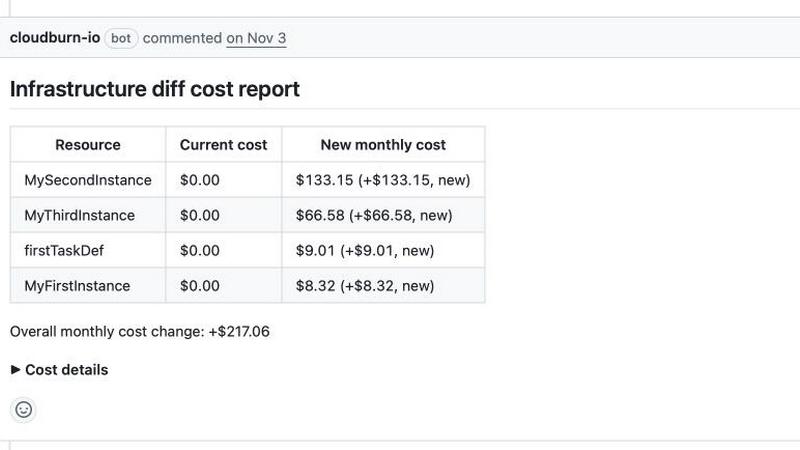
CloudBurn provides instant, automated cost analysis for every infrastructure change directly in your pull requests. Using live AWS pricing data, it calculates the exact monthly cost impact of your Terraform or CDK diff and posts a detailed, line-item report as a comment within seconds. This allows your team to see the financial consequences of a new t3.xlarge instance or Fargate task definition before a single resource is provisioned, preventing surprises.
Seamless GitHub Integration
Get started in minutes with a 100% GitHub-native experience. Simply install CloudBurn from the GitHub Marketplace, add the corresponding GitHub Action to your workflow, and you're done. Billing, setup, and permissions are handled securely through GitHub, requiring no separate dashboard logins or complex IAM configurations. It integrates directly into the tools developers already use every day.
Automated FinOps Guardrails
CloudBurn transforms your CI/CD pipeline into an automated FinOps enforcement point. It acts as a proactive guardrail, catching expensive misconfigurations—like accidentally deploying a production-grade database in a dev environment—before they can spiral into a five-figure AWS bill. This creates a powerful, automated feedback loop that makes cost optimization a natural part of the development lifecycle.
Live AWS Pricing Data
Forget outdated spreadsheets and manual estimations. CloudBurn's estimates are powered by real-time AWS pricing data, ensuring accuracy for every region and service. Whether you're deploying EC2 instances, RDS databases, or Lambda functions, you get an up-to-the-minute cost breakdown for each resource, so your team can make informed decisions based on current market rates.
OpenMark AI
Plain Language Task Benchmarking
Ditch complex configurations and scripting. Simply describe the task you want to test in natural language. OpenMark AI intelligently configures the benchmark, allowing you to run identical prompts across dozens of models instantly. This human-centric approach means you can validate real-world use cases—from email classification to code generation—without writing a single line of code, making advanced testing accessible to entire product teams.
Real API Cost & Performance Comparison
Go beyond theoretical token prices. OpenMark AI makes real, live API calls to each model provider and presents you with a detailed breakdown of the actual cost per request, latency, and scored output quality for every single test. This side-by-side comparison reveals the true trade-offs, helping you find the optimal balance between performance and budget, ensuring you never overpay for capability you don't need.
Stability & Variance Analysis
A single test run is just luck. OpenMark AI runs your prompts multiple times to measure consistency and output stability. See which models deliver reliable, high-quality results every time and which ones produce erratic, unpredictable outputs. This critical feature exposes variance, giving you the confidence that the model you choose will perform consistently in production, not just in a one-off demo.
Hosted Catalog with No API Key Hassle
Access a massive, constantly updated catalog of 100+ leading models without the headache of signing up for and configuring individual API keys from OpenAI, Anthropic, Google, and others. Simply use OpenMark's credit system to run benchmarks. This centralized access dramatically speeds up the evaluation process, letting you focus on analysis and decision-making instead of administrative setup.
Use Cases
CloudBurn
Preventing Costly Developer Mistakes
Catch simple, expensive errors before they deploy. A developer might accidentally change an instance type from t3.micro to t3.xlarge, unknowingly adding over $130 to the monthly bill. CloudBurn flags this in the PR review, allowing the team to catch and correct it immediately, turning a potential budget disaster into a minor code comment.
Enabling Proactive Architecture Reviews
Facilitate data-driven architecture discussions during code review. When a team proposes a new microservice using Fargate, CloudBurn provides the concrete monthly cost, allowing architects and engineers to weigh the benefits against the expense and optimize the resource allocation (e.g., CPU/memory settings) collaboratively before any commitment is made.
Streamlining FinOps for Engineering Teams
Empower developers to own cloud costs without becoming pricing experts. CloudBurn bakes financial accountability directly into the developer workflow, providing the context needed at the exact moment a decision is made. This shifts the culture from reactive bill-shock to proactive cost management, making every engineer a cost-conscious architect.
Gaining Visibility into Infrastructure Drift
Track the cumulative financial impact of infrastructure changes over time. As multiple pull requests merge throughout a sprint, small cost increments can add up silently. CloudBurn provides a clear audit trail of cost decisions per PR, helping teams understand how their infrastructure evolution directly impacts the monthly cloud spend.
OpenMark AI
Pre-Deployment Model Selection
You're about to ship a new AI-powered feature. Instead of guessing between GPT-4, Claude 3, or Gemini, use OpenMark AI to test all contenders on your exact task. Compare real costs, accuracy, and speed in one dashboard to make a data-driven decision that aligns with your technical requirements and budget, ensuring you launch with the best-fit model from day one.
Cost Optimization for Scaling Applications
Your application is live, but API costs are creeping up. Use OpenMark AI to benchmark newer, more cost-efficient models against your current provider. Discover if a smaller, faster model can deliver comparable quality for a fraction of the price, or identify where you can downgrade model tiers without sacrificing user experience, directly boosting your margins.
Validating Model Consistency for Critical Tasks
For tasks where reliability is non-negotiable—like legal document analysis, medical data extraction, or financial summarization—you need consistent outputs. OpenMark AI's repeat-run analysis shows you the variance. Identify which models are stable workhorses and which are unpredictable, preventing costly errors and ensuring trust in your automated workflows.
Prototyping & Research for AI Products
Exploring a new AI concept? Rapidly prototype by testing a wide range of models on your novel task or prompt chain. OpenMark AI lets you quickly see which model families excel at specific capabilities like reasoning, creativity, or instruction-following, accelerating your R&D phase and providing concrete data to guide your development roadmap.
Overview
About CloudBurn
CloudBurn is the revolutionary FinOps guardrail that stops AWS cost overruns before they happen, directly inside your developer workflow. Built for engineering teams using Terraform or AWS CDK, it transforms how you manage cloud spend by shifting cost visibility left. Instead of discovering budget-busting mistakes weeks later on a shocking AWS bill, CloudBurn provides real-time, automated cost analysis for every infrastructure change during code review. When a developer opens a pull request, CloudBurn instantly calculates the exact monthly cost impact using live AWS pricing data and posts a detailed, line-item report as a comment. This creates a powerful feedback loop, empowering teams to discuss, optimize, and adjust costly configurations before deployment, when changes are cheap and easy. It's more than a tool; it's a cultural shift towards proactive cost ownership, turning every engineer into a cost-conscious architect. By embedding financial accountability into the CI/CD pipeline, CloudBurn delivers immediate ROI, prevents costly misconfigurations, and finally breaks the cycle of reactive, panic-driven cloud cost optimization. Join thousands of developers who have made cost awareness a core part of their PR review process.
About OpenMark AI
Stop playing roulette with your AI model choices. OpenMark AI is the definitive, no-code platform that lets you benchmark 100+ large language models (LLMs) on your actual tasks before you commit to a single API. Forget datasheet promises and marketing hype. Describe what you need in plain English—whether it's complex data extraction, creative writing, or agentic reasoning—and run the same prompt against a massive catalog of models from OpenAI, Anthropic, Google, and more in one seamless session. You get side-by-side results comparing real API costs, latency, scored output quality, and critical stability metrics across repeat runs. This means you see the variance and consistency, not just a single lucky output. Built for pragmatic developers and product teams, OpenMark AI cuts through the noise with hosted benchmarking credits, eliminating the nightmare of managing a dozen separate API keys. It’s the essential pre-deployment tool for anyone who cares about cost efficiency (quality you get for the price you pay) and shipping reliable AI features with confidence. Join thousands of developers worldwide who have moved from guessing to knowing.
Frequently Asked Questions
CloudBurn FAQ
How does CloudBurn calculate costs?
CloudBurn analyzes the infrastructure diff from your Terraform plan or AWS CDK synthesis output. It extracts the resource types, configurations, and regions, then queries live AWS Pricing API data to calculate the estimated monthly run rate. The result is a detailed report showing the cost per resource and the total impact of the pull request.
Is my code or cloud credentials safe with CloudBurn?
Absolutely. CloudBurn is designed with security as a priority. The application is installed via GitHub and only receives the textual output of your terraform plan or cdk diff command. It never requires or has access to your AWS credentials, secret keys, or the actual state of your cloud infrastructure.
What infrastructure-as-code tools does CloudBurn support?
CloudBurn currently provides native, seamless integration for the two most popular IaC frameworks: HashiCorp Terraform and AWS Cloud Development Kit (CDK). Support for additional tools is frequently evaluated based on community demand and can be found on the public product roadmap.
Can I try CloudBurn for free?
Yes! You can start with the Community plan for free forever. To experience the full power of automated PR comments and advanced features, you can begin a 14-day Pro trial with no credit card required. You can cancel anytime or revert to the Community plan if the Pro tier doesn't fit your needs.
OpenMark AI FAQ
How is OpenMark AI different from other LLM benchmarks?
Most benchmarks test models on generic, academic datasets. OpenMark AI is built for your specific, real-world tasks. We run live API calls, giving you actual cost and latency data alongside quality scores for your exact use case. We also test stability across multiple runs, showing variance—something static leaderboards completely miss.
Do I need my own API keys to use OpenMark AI?
No! That's a key benefit. OpenMark AI operates on a credit system. You purchase credits and can run benchmarks against our entire hosted catalog of models without ever needing to supply or manage separate API keys from OpenAI, Anthropic, or Google. It's a unified, hassle-free testing platform.
What kind of tasks can I benchmark?
Virtually anything! Developers use it for classification, translation, data extraction, RAG system evaluation, agent routing logic, research assistance, Q&A, image analysis prompts, and creative writing. If you can describe it in plain language, you can benchmark it. The platform is designed for flexible, real-world application testing.
How does the scoring and quality assessment work?
OpenMark AI uses a combination of automated evaluation metrics tailored to your task type (like accuracy, relevance, or faithfulness) and, where configured, can incorporate human-like judgment criteria. The system scores each model's output consistently across all runs, providing a clear, comparable quality metric alongside the hard cost and speed data.
Alternatives
CloudBurn Alternatives
CloudBurn is a revolutionary FinOps guardrail in the development tools category, designed to stop AWS cost overruns by providing real-time cost estimates directly inside pull requests. Teams often explore alternatives for reasons like budget constraints, needing support for additional cloud providers, or requiring different integration points within their specific CI/CD pipeline. When evaluating other solutions, it's crucial to look for core capabilities like automated cost analysis triggered by infrastructure-as-code changes, integration with your version control system, and the use of live, accurate pricing data. The goal is to find a tool that embeds proactive cost governance into the developer workflow, preventing surprises and fostering a culture of cost ownership.
OpenMark AI Alternatives
OpenMark AI is a leading developer tool for task-level benchmarking of large language models. It lets you test over 100 LLMs on your specific prompts, comparing real-world cost, speed, quality, and stability in one browser-based session. This is the go-to platform for teams who need data-driven confidence before launching an AI feature. Developers often explore alternatives for various reasons. Some might need a different pricing model or a self-hosted solution for stricter data governance. Others may seek tools with deeper integration into their existing CI/CD pipeline or require benchmarking for a niche set of models not covered elsewhere. When evaluating other options, focus on what matters for your workflow. Key considerations include whether the tool uses real API calls for accurate results, how it measures output consistency beyond a single run, and if it provides a holistic view of cost-efficiency—balancing price with actual performance for your task.