
FilexHost vs Miget
Side-by-side comparison to help you choose the right AI tool.

Join thousands who host and share files instantly with a simple drag and drop.
Last updated: February 28, 2026

Miget
Deploy unlimited services on one flat-rate plan.
Visual Comparison
FilexHost
Miget
Overview
About FilexHost
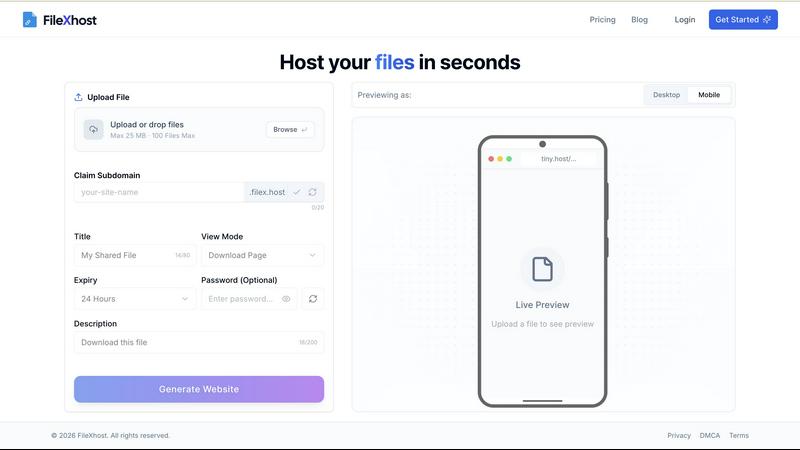
Tired of clunky file-sharing services that demand logins, have tiny attachment limits, or bury your content behind "request access" walls? Welcome to FilexHost, the viral file-hosting platform that's exploding in popularity for its breathtaking simplicity and power. FilexHost is your instant, universal file hub. It eliminates every ounce of friction from sharing. Just drag, drop, and share a secure link—no setup, no servers, no tech skills needed. It’s not just a dumb storage box; it’s a smart presentation layer. Upload a spreadsheet, and it becomes an interactive table. Drop an HTML project, and it instantly renders as a live, functional website. Share a video, and it plays right in the browser. With over a million files hosted and featured on top AI and tech directories, creators, developers, and professionals are ditching outdated methods for FilexHost’s sleek, "Drop & Share" workflow. Whether you're delivering a client report, distributing a digital product, or hosting a project demo, FilexHost ensures your recipients see your work exactly as intended, beautifully presented without a single download or plugin required.
About Miget
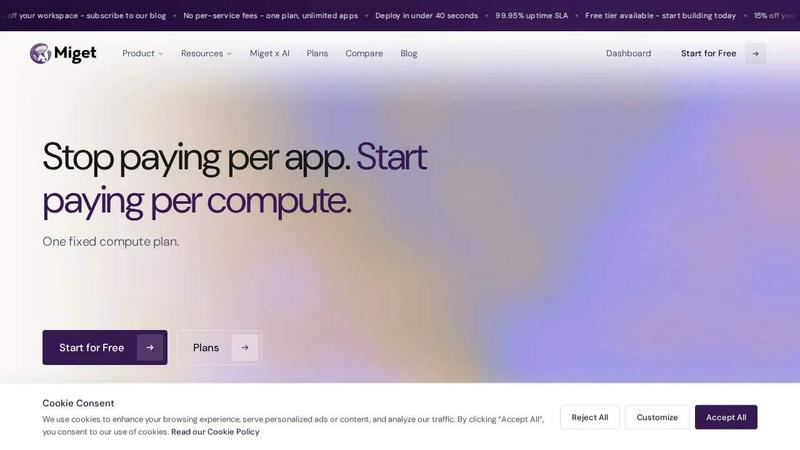
Miget – Stop paying per app. Start paying per compute.
Traditional PaaS platforms charge you for every app, database, and worker separately. Miget flips that model: pick a fixed compute plan, then deploy as many services as you want inside it.
- Unlimited apps, databases, and background workers per plan
- No per-service billing surprises
- Built on Kubernetes with full isolation between tenants
- Deploy from Git, GitHub, Registry with zero-config builds
- Managed PostgreSQL, Redis, and more
- Custom domains with automatic TLS
Whether you're running a single side project or a full production stack, you only pay for the compute you reserve—not the number of things you run on it.