
CloneUI vs Miget
Side-by-side comparison to help you choose the right AI tool.

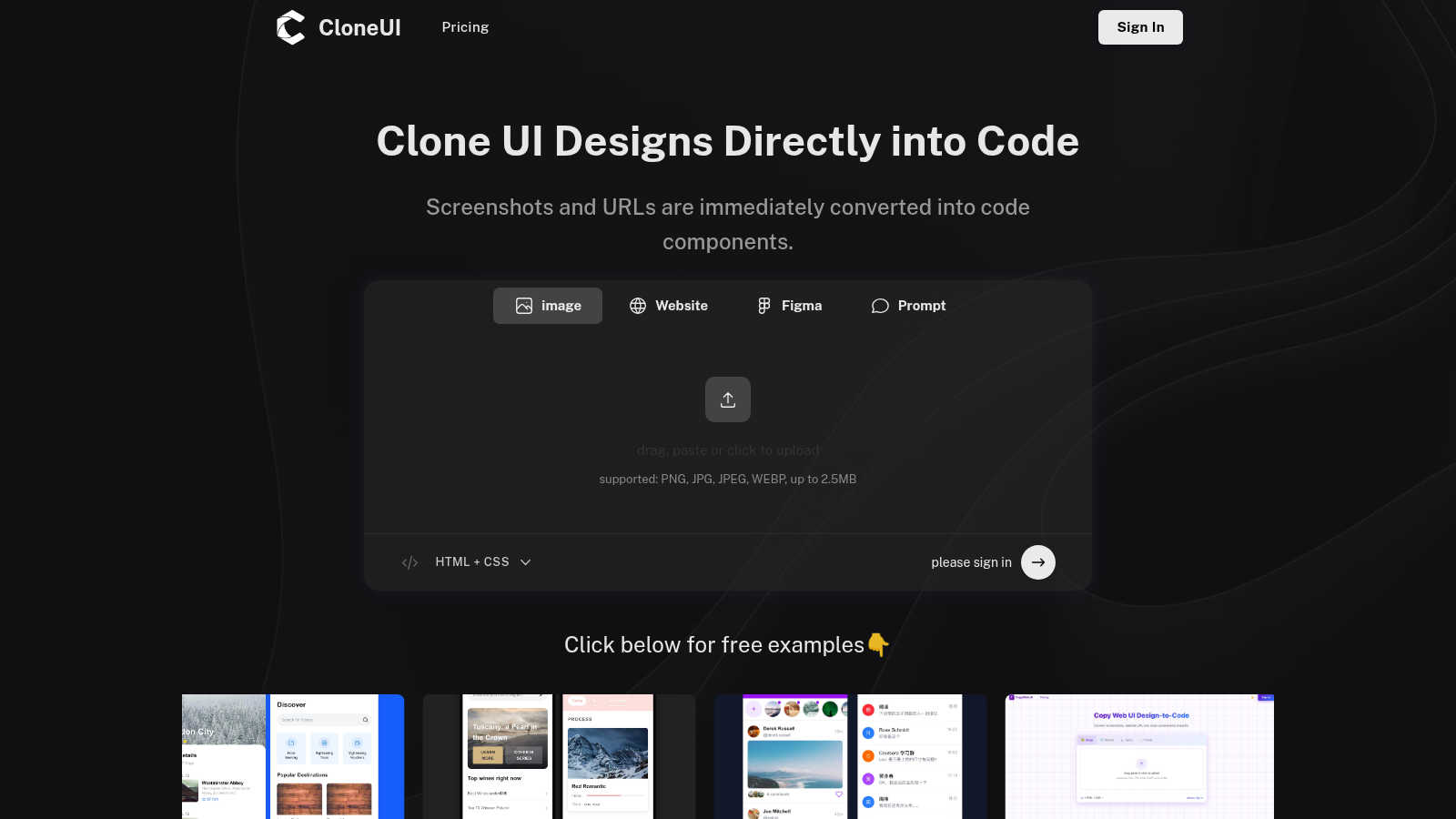
CloneUI instantly transforms any website screenshot or URL into responsive React, HTML, or Vue code with remarkable.
Last updated: March 1, 2026

Miget
Deploy unlimited services on one flat-rate plan.
Visual Comparison
CloneUI
Miget
Overview
About CloneUI
CloneUI is a groundbreaking AI-powered tool designed to revolutionize the way web designers and developers convert website designs into production-ready code. This innovative platform enables users to transform a simple screenshot or a website URL into clean, responsive HTML, CSS, and code tailored for specific frameworks in mere seconds. Whether you are a seasoned web designer, a front-end developer, or an enthusiastic hobbyist, CloneUI streamlines your workflow, allowing you to focus on creativity rather than tedious manual coding. The main value proposition of CloneUI lies in its ability to generate high-quality, production-ready code instantly. This not only saves precious time but also enhances productivity, ensuring that your designs come to life effortlessly. With a user-friendly interface and intelligent component recognition, CloneUI empowers anyone in the UI/UX design space to enhance their coding efficiency and deliver exceptional results quickly. Join the growing community of users who have already embraced this essential tool to elevate their web development experience.
About Miget
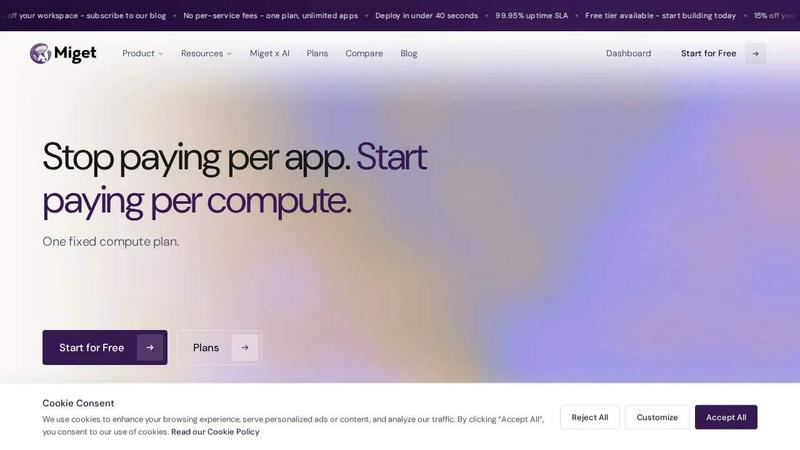
Miget – Stop paying per app. Start paying per compute.
Traditional PaaS platforms charge you for every app, database, and worker separately. Miget flips that model: pick a fixed compute plan, then deploy as many services as you want inside it.
- Unlimited apps, databases, and background workers per plan
- No per-service billing surprises
- Built on Kubernetes with full isolation between tenants
- Deploy from Git, GitHub, Registry with zero-config builds
- Managed PostgreSQL, Redis, and more
- Custom domains with automatic TLS
Whether you're running a single side project or a full production stack, you only pay for the compute you reserve—not the number of things you run on it.