
Product Launchpad vs Right Suite
Side-by-side comparison to help you choose the right AI tool.

Launch your product to early adopters and keep getting visibility, traffic, and users over time.

Right Suite
Go-To-Market validation tool for founders
Visual Comparison
Product Launchpad
Right Suite
Overview
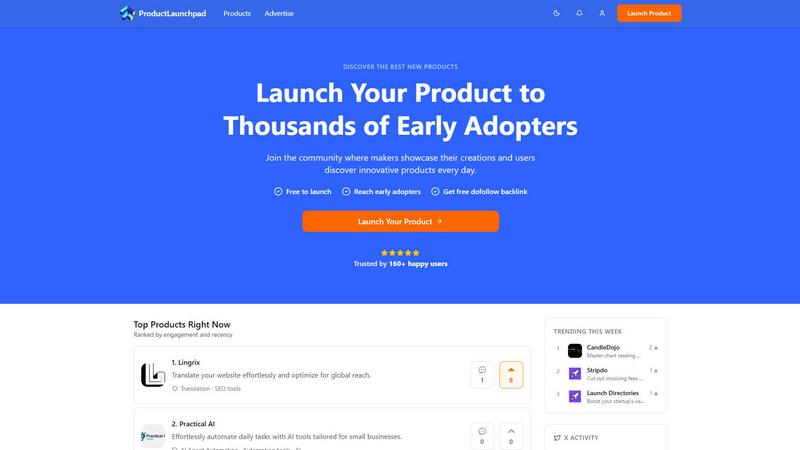
About Product Launchpad
ProductLaunchpad is a launch platform for founders, indie hackers, and marketing teams who want consistent growth, not a short spike. Most platforms give you attention for a day. After that, your product disappears. ProductLaunchpad is built differently.
Your product stays discoverable and continues to reach early adopters over time. You can launch in minutes with AI-assisted submission, get a free dofollow backlink, and improve your visibility in search engines and LLMs.
The focus is on long-term exposure and matching products with the right users. This helps you generate ongoing traffic, feedback, and signups instead of chasing one-time launch metrics.
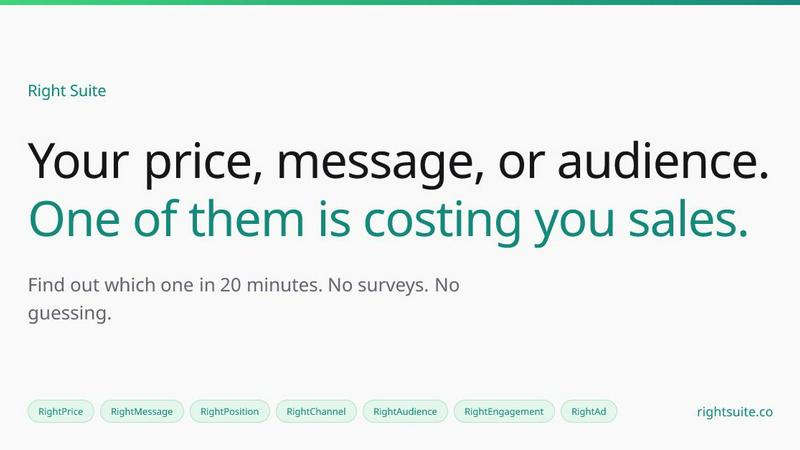
About Right Suite
Right Suite is a go‑to‑market validation platform that helps founders and teams test their pricing, messaging, audience, channels, and ads before they spend serious time or money on launch. Instead of guessing who will buy, what to charge, or what to say, users run fast simulations against 100+ modeled buyers and get data-backed answers in about 20 minutes.
The product is organized into focused tools—RightAudience, RightPositioning, RightPrice, RightChannel, RightEngagement, RightAd, and RightMessaging—that each answer a specific GTM question like “who’s most likely to pay?”, “why would buyers pick us?”, or “will this ad stop the scroll?”. Results show which segments, price points, messages, and channels are most likely to convert, so companies can prioritize the highest-signal strategy before burning pipeline or ad spend.
Right Suite uses a credit-based subscription model (Starter, Growth, Scale), where credits can be used across all these products. It’s aimed at early-stage startups, teams launching new products, and agencies, helping them reduce the risk of GTM failure and avoid using the live market as their first testing ground.