
Fallom vs Mod
Side-by-side comparison to help you choose the right AI tool.

See every LLM call in real time for effortless AI agent tracking, analysis, and compliance.
Last updated: February 28, 2026

Join thousands building faster SaaS UIs with Mod's ready-to-use CSS components.
Visual Comparison
Fallom
Mod
Feature Comparison
Fallom
Real-Time LLM Call Tracing
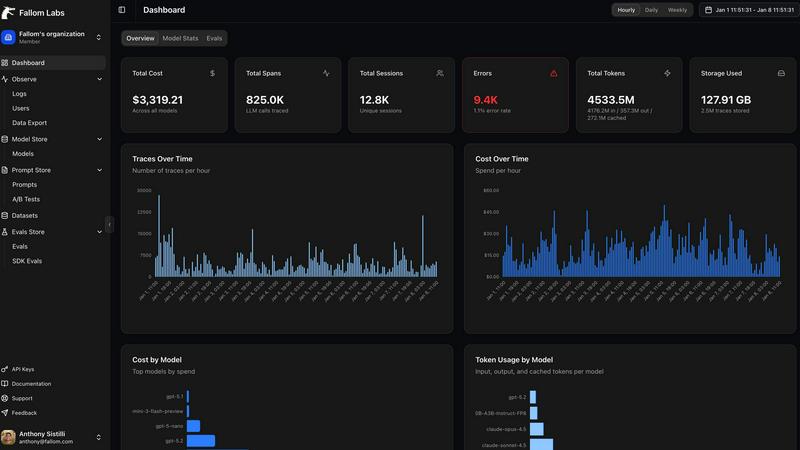
See every interaction as it happens with a live, queryable trace table. Drill down into individual calls to inspect the exact prompt, model response, tool calls with arguments, token usage, latency, and per-call cost. This granular visibility is the foundation for debugging complex agent failures and understanding exactly what your AI is doing in production, turning opaque processes into transparent, actionable data.
Granular Cost Attribution & Analytics
Move beyond vague cloud bills. Fallom automatically breaks down your AI spend by model, user, team, session, or even specific customer. Visual dashboards show you exactly where every dollar is going—whether it's GPT-4o, Claude, or Gemini—enabling precise budgeting, showback/chargeback, and data-driven decisions to optimize for cost-performance without sacrificing quality.
Enterprise Compliance & Audit Trails
Built for regulated industries, Fallom provides immutable, complete audit trails of all AI activity. It logs inputs, outputs, model versions, and user consent, directly supporting requirements for GDPR, the EU AI Act, and SOC 2. Features like configurable privacy mode allow you to redact sensitive data while maintaining full telemetry, ensuring you can deploy AI with confidence.
Advanced Workflow Debugging Tools
Debug complex, multi-step agentic workflows with ease. The timing waterfall visualization breaks down latency across LLM calls and tool executions to pinpoint bottlenecks. Simultaneously, full tool call visibility lets you inspect every function call, its arguments, and returned results, making it simple to identify logic errors or external API failures in intricate chains.
Mod
Massive Library of 88+ Pre-Built Components
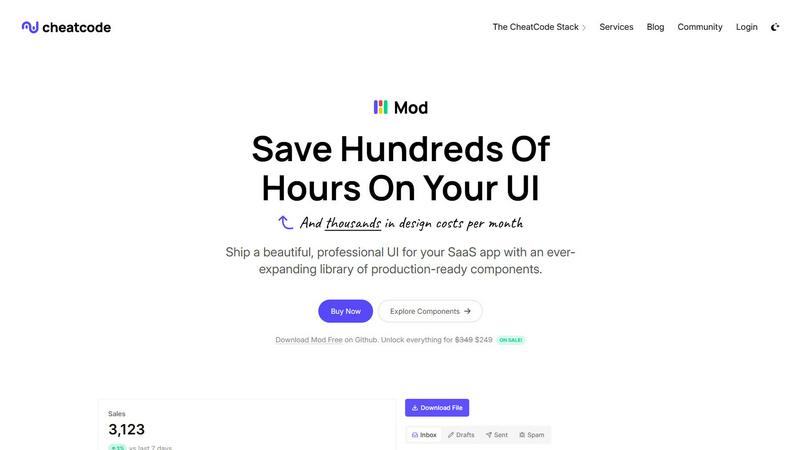
Why waste time coding another button, card, or modal from the ground up? Mod delivers an extensive, battle-tested collection of over 88 essential UI components specifically designed for SaaS applications. We're talking everything from complex data tables and feature-rich dashboards to elegant pricing tables and interactive forms. Each component is built with accessibility and best practices in mind, so you get professional-grade UI elements out of the box. This vast library means you can prototype full application flows in hours, not weeks, and spend your mental energy on solving real business problems instead of CSS puzzles.
Framework-Agnostic & Zero-Vendor Lock-In
Your tech stack is sacred. Mod respects that. Unlike other UI kits that chain you to a single framework like React or Vue, Mod is completely framework-agnostic. It works seamlessly with Next.js, Nuxt, Svelte, Vite, Astro, and even server-side frameworks like Ruby on Rails and Django. This freedom is a game-changer for teams, allowing you to adopt Mod across different projects without rewriting your entire frontend. It future-proofs your investment, ensuring your beautiful UI can migrate with you if you ever decide to switch frameworks down the line.
Complete Dark Mode & Dual Theme System
Dark mode isn't a luxury anymore; it's a user expectation. Mod ships with two beautiful, fully realized themes (light and dark) that are perfectly coordinated across all 88+ components and 1,500+ icons. Implementing a flawless, toggle-able dark mode is as simple as adding a CSS class. No more manually adjusting colors, shadows, or contrast for hours. The entire design system adapts cohesively, providing a premium user experience that keeps your app looking consistent and modern, no matter your user's preference.
Mobile-First & Fully Responsive Design
With over half of all web traffic coming from mobile devices, a non-responsive SaaS UI is a death sentence. Mod is built from the ground up with a strict mobile-first philosophy. Every single component, layout, and style is meticulously engineered to look and function flawlessly on every screen size, from compact smartphones to wide desktop monitors. This responsive guarantee means you launch with confidence, knowing your application will deliver a perfect experience to every user, eliminating one of the biggest headaches in frontend development.
Use Cases
Fallom
Optimizing AI Agent Performance & Reliability
Engineering teams use Fallom to monitor live AI agents handling customer support, data analysis, or booking tasks. By analyzing latency waterfalls and tool call success rates, they can quickly identify and fix performance bottlenecks, reduce error rates, and ensure a reliable user experience, leading to higher customer satisfaction and trust in their AI products.
Controlling and Forecasting AI Operational Costs
Finance and engineering leaders leverage Fallom's cost attribution dashboards to gain full transparency into unpredictable AI spending. They track costs per project, team, or feature, forecast budgets accurately, implement chargebacks, and identify opportunities to switch models for less expensive calls without impacting output quality, directly improving unit economics.
Ensuring Regulatory Compliance for AI Deployments
Legal and compliance teams in healthcare, finance, and enterprise software rely on Fallom to generate the necessary audit trails for AI governance. The platform logs all required data—prompts, responses, model versions, and user consent—providing a verifiable record to demonstrate adherence to GDPR, AI Act, and internal policy requirements during audits.
Improving AI Products with Data-Driven Insights
Product managers and developers use Fallom's session tracking and customer analytics to understand how users interact with AI features. They identify power users, analyze common query patterns, and A/B test different prompts or models using the integrated prompt store and traffic splitting, using real data to iterate and improve product offerings.
Mod
Rapid Prototyping for Startup MVPs
For founders and indie hackers racing to validate an idea, speed is everything. Mod is the ultimate prototyping accelerator. Instead of spending weeks designing and coding a basic UI, you can use Mod's component library to assemble a high-fidelity, investor-ready Minimum Viable Product in a matter of days. The professional polish of the components makes your MVP look like a established product, helping you gather better feedback, attract early users, and secure funding without the massive upfront design cost.
Standardizing Design Across Development Teams
As engineering teams grow, UI inconsistency becomes a major productivity killer. Mod acts as your single source of truth for design. By providing a comprehensive, reusable component library with strict design tokens, it ensures every developer on your team—from junior to senior—is building interfaces that are consistent, accessible, and on-brand. This drastically reduces code review cycles, eliminates design debt, and allows your team to ship new features faster while maintaining a unified, professional user experience.
Rebuilding Legacy Application UIs
Modernizing a clunky, outdated enterprise or legacy application is a daunting task. Mod provides a clear path forward. Its framework-agnostic nature means you can incrementally apply its modern CSS and components to an old Rails, Django, or even jQuery application without a full rewrite. You can section by section, replace outdated UI elements with Mod's sleek components, instantly lifting the visual appeal and usability of the entire application while systematically managing the technical migration.
Building Internal Tools & Admin Dashboards
Internal tools and admin panels often get neglected in the design process, leading to ugly, inefficient interfaces that hurt productivity. Mod is the perfect solution for building powerful, intuitive internal software. Its extensive component set includes everything needed for complex dashboards: charts, data grids, filters, and detailed layouts. You can quickly build tools that your team actually enjoys using, boosting operational efficiency without diverting precious design resources from your customer-facing product.
Overview
About Fallom
Fallom is the AI-native observability platform that's taking the industry by storm, built from the ground up for the era of Large Language Models (LLMs) and autonomous agents. It solves the critical "black box" problem for engineering and product teams deploying AI in production. While traditional monitoring tools fall short, Fallom provides granular, end-to-end visibility into every single LLM call, tool invocation, and multi-step workflow. Imagine seeing a real-time dashboard of every AI interaction—prompts, outputs, tokens, latency, and exact costs—allowing you to instantly debug a failing agent, optimize a slow chain, or explain a cost spike. Trusted by fast-moving startups and global enterprises alike, Fallom is essential for anyone serious about building reliable, cost-effective, and compliant AI applications. Its unique value lies in unifying cost attribution, performance debugging, and compliance auditing into a single, OpenTelemetry-native platform that you can integrate in under five minutes, finally giving teams the control they need over their AI operations.
About Mod
Tired of wrestling with CSS while your SaaS app's UI looks like a 2005 blog? You're not alone. That's why thousands of developers are ditching design chaos and embracing Mod, the CSS framework built exclusively for shipping professional, polished SaaS products at breakneck speed. Mod isn't just another component library; it's a complete design system engineered to eliminate the endless hours spent on styling, theming, and responsiveness. With an insane library of 88+ production-ready components, 168 meticulously crafted styles, and over 1,500 icons, Mod gives you the building blocks to assemble stunning user interfaces that look like you hired a top-tier design agency. Its framework-agnostic superpower means it seamlessly integrates with your stack, whether you're rocking Next.js, Nuxt, SvelteKit, Vite, or even traditional backends like Rails and Django. For solo founders, indie hackers, and startup teams, Mod is the secret weapon to slash design costs, accelerate time-to-market, and build apps that users instantly trust and love. Stop building from scratch. Start shipping with style.
Frequently Asked Questions
Fallom FAQ
How quickly can I integrate Fallom into my existing application?
Integration is famously quick. With the single, OpenTelemetry-native SDK, most teams are sending their first traces and seeing data in the Fallom dashboard in under 5 minutes. There's no need to rip and replace your existing infrastructure; it layers seamlessly on top of your current LLM calls and agent frameworks.
Does Fallom support all major LLM providers and frameworks?
Absolutely. Fallom is provider-agnostic and works with every major provider, including OpenAI (GPT), Anthropic (Claude), Google (Gemini), Cohere, and open-source models. It also integrates with popular agent frameworks like LangChain and LlamaIndex. The OpenTelemetry foundation ensures zero vendor lock-in.
How does Fallom handle sensitive or private user data?
Fallom is built with enterprise-grade privacy controls. You can enable "Privacy Mode" to disable full content capture, logging only metadata like token counts and latency. For more granular control, configurable redaction rules allow you to strip specific PII or sensitive keywords, ensuring compliance with strict data handling policies.
Can I use Fallom to A/B test different models or prompts?
Yes, Fallom includes first-class support for experimentation. You can split traffic between different models (like GPT-4o and Claude 3.5) or different versions of prompts stored in the Prompt Store. The dashboard then lets you compare their performance, cost, and quality metrics side-by-side to make informed, data-driven deployment decisions.
Mod FAQ
What frameworks is Mod compatible with?
Mod is proudly framework-agnostic! It works seamlessly with all modern frontend and full-stack frameworks. This includes React-based frameworks like Next.js and Vite, Vue.js frameworks like Nuxt, Svelte and SvelteKit, as well as traditional server-rendered frameworks like Ruby on Rails, Django, Laravel, and Phoenix. Since it's built with plain, well-structured CSS, it integrates with virtually any web technology stack.
How does Mod handle customization and branding?
While Mod provides beautiful default themes, it's built for deep customization. The entire system uses CSS custom properties (variables) for colors, spacing, typography, and more, making it incredibly easy to override and match your specific brand identity. You can tweak a few variables to apply your brand colors globally, or dive deeper to modify individual component styles without breaking the core system, giving you full creative control.
Is Mod suitable for large-scale enterprise applications?
Absolutely. Mod is engineered for scale. The component library covers the vast majority of UI needs for complex SaaS and enterprise applications, from data-intensive dashboards to intricate user workflows. Its focus on clean code, accessibility standards, and responsive design ensures the foundation is robust and maintainable. Many teams use Mod to ensure design consistency and accelerate development across massive codebases with multiple feature teams.
Do I get access to updates and new components?
Yes! When you purchase Mod, you receive all yearly updates at no additional cost. The CheatCode team is continuously refining the system, adding new components, and enhancing existing ones based on community feedback and modern design trends. This means your investment keeps growing in value over time, and your applications can easily adopt the latest UI patterns without any costly rework or re-purchasing.