
Mechasm.ai vs Miget
Side-by-side comparison to help you choose the right AI tool.

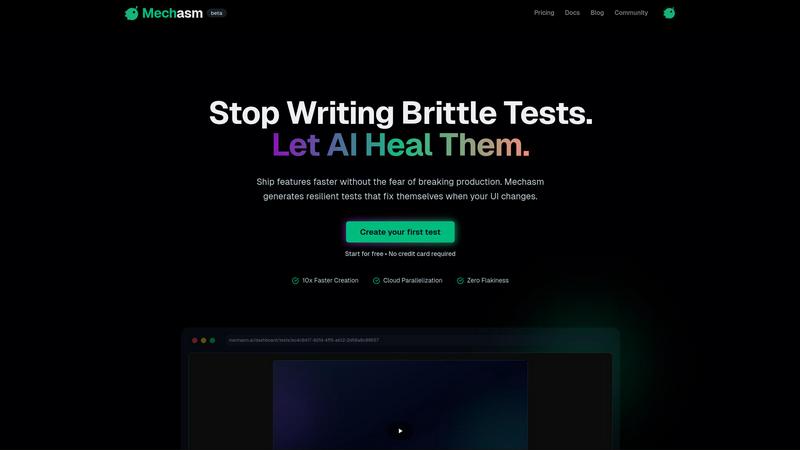
Transform your E2E testing with Mechasm.ai's AI-driven, self-healing tests for faster, reliable, and code-free.
Last updated: February 28, 2026

Miget
Deploy unlimited services on one flat-rate plan.
Visual Comparison
Mechasm.ai
Miget
Overview
About Mechasm.ai
Mechasm.ai is a cutting-edge AI-driven automated testing platform crafted to redefine how engineering teams tackle quality assurance. In a fast-paced environment like 2026, where rapid development cycles become the norm, traditional testing frameworks often lead to bottlenecks that hinder productivity. Mechasm.ai resolves these issues through its innovative Agentic QA, which seamlessly connects human intent with technical execution. With the ability to articulate test scenarios in plain English, the platform empowers developers, product managers, and designers alike to ensure flawless user journeys without necessitating specialized QA expertise. Its intelligent functionalities, including self-healing tests and cloud execution, dramatically reduce maintenance time, enabling teams to release features swiftly and confidently. By enhancing collaboration and democratizing quality assurance, Mechasm.ai fosters a more agile development environment conducive to continuous improvement and innovation.
About Miget
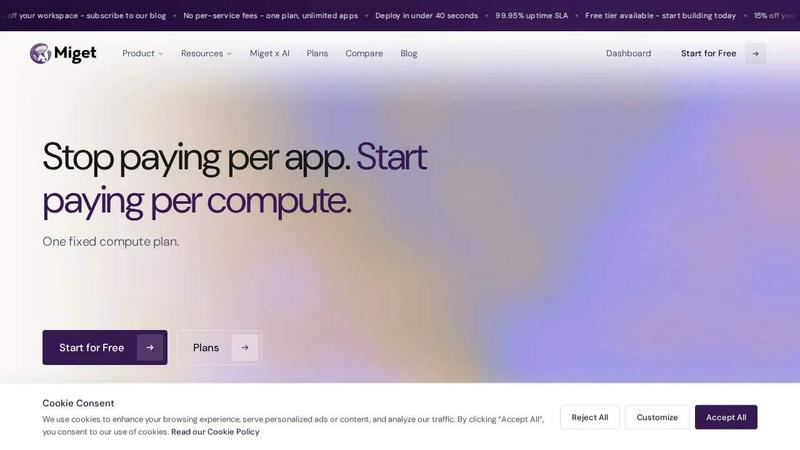
Miget – Stop paying per app. Start paying per compute.
Traditional PaaS platforms charge you for every app, database, and worker separately. Miget flips that model: pick a fixed compute plan, then deploy as many services as you want inside it.
- Unlimited apps, databases, and background workers per plan
- No per-service billing surprises
- Built on Kubernetes with full isolation between tenants
- Deploy from Git, GitHub, Registry with zero-config builds
- Managed PostgreSQL, Redis, and more
- Custom domains with automatic TLS
Whether you're running a single side project or a full production stack, you only pay for the compute you reserve—not the number of things you run on it.