
Fallom vs qtrl.ai
Side-by-side comparison to help you choose the right AI tool.

See every LLM call in real time for effortless AI agent tracking, analysis, and compliance.
Last updated: February 28, 2026

qtrl.ai
qtrl.ai empowers QA teams to scale testing with AI-driven agents while ensuring complete control and governance.
Last updated: March 4, 2026
Visual Comparison
Fallom
qtrl.ai
Feature Comparison
Fallom
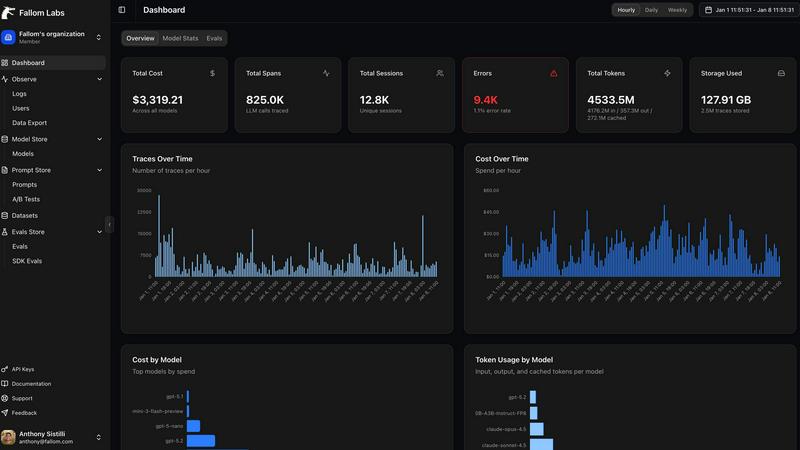
Real-Time LLM Call Tracing
See every interaction as it happens with a live, queryable trace table. Drill down into individual calls to inspect the exact prompt, model response, tool calls with arguments, token usage, latency, and per-call cost. This granular visibility is the foundation for debugging complex agent failures and understanding exactly what your AI is doing in production, turning opaque processes into transparent, actionable data.
Granular Cost Attribution & Analytics
Move beyond vague cloud bills. Fallom automatically breaks down your AI spend by model, user, team, session, or even specific customer. Visual dashboards show you exactly where every dollar is going—whether it's GPT-4o, Claude, or Gemini—enabling precise budgeting, showback/chargeback, and data-driven decisions to optimize for cost-performance without sacrificing quality.
Enterprise Compliance & Audit Trails
Built for regulated industries, Fallom provides immutable, complete audit trails of all AI activity. It logs inputs, outputs, model versions, and user consent, directly supporting requirements for GDPR, the EU AI Act, and SOC 2. Features like configurable privacy mode allow you to redact sensitive data while maintaining full telemetry, ensuring you can deploy AI with confidence.
Advanced Workflow Debugging Tools
Debug complex, multi-step agentic workflows with ease. The timing waterfall visualization breaks down latency across LLM calls and tool executions to pinpoint bottlenecks. Simultaneously, full tool call visibility lets you inspect every function call, its arguments, and returned results, making it simple to identify logic errors or external API failures in intricate chains.
qtrl.ai
Autonomous QA Agents
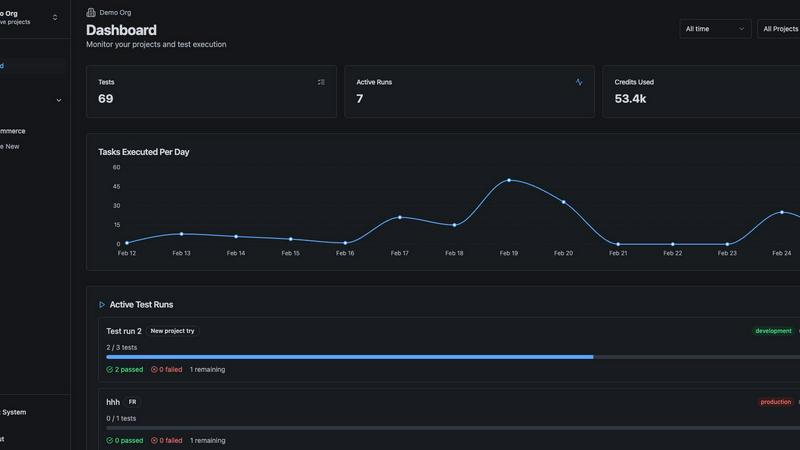
qtrl.ai features autonomous QA agents that allow for on-demand or continuous execution of instructions. The agents run tests across multiple environments at scale, ensuring that operations conform to user-defined rules. Unlike other solutions, qtrl.ai utilizes real browser execution rather than simulations, providing genuine testing scenarios and results.
Enterprise-Grade Test Management
With qtrl.ai, users benefit from a robust test management system that centralizes test cases, plans, and runs. This feature provides full traceability and audit trails, supporting both manual and automated workflows. It is specifically designed to help organizations comply with regulatory standards, ensuring that quality assurance processes are both effective and accountable.
Progressive Automation
qtrl.ai supports a progressive automation approach that allows teams to start with human-written test instructions before transitioning to AI-generated tests. As teams gain confidence, qtrl.ai can suggest new tests based on coverage analysis, allowing for a review and approval process at every step. This ensures users maintain control while still benefiting from automation.
Adaptive Memory
The adaptive memory feature of qtrl.ai builds a living knowledge base of your application by learning from exploration, test execution, and identified issues. This capability drives smarter, context-aware test generation, becoming increasingly effective with each interaction and ensuring that QA processes are continually refined based on past experiences.
Use Cases
Fallom
Optimizing AI Agent Performance & Reliability
Engineering teams use Fallom to monitor live AI agents handling customer support, data analysis, or booking tasks. By analyzing latency waterfalls and tool call success rates, they can quickly identify and fix performance bottlenecks, reduce error rates, and ensure a reliable user experience, leading to higher customer satisfaction and trust in their AI products.
Controlling and Forecasting AI Operational Costs
Finance and engineering leaders leverage Fallom's cost attribution dashboards to gain full transparency into unpredictable AI spending. They track costs per project, team, or feature, forecast budgets accurately, implement chargebacks, and identify opportunities to switch models for less expensive calls without impacting output quality, directly improving unit economics.
Ensuring Regulatory Compliance for AI Deployments
Legal and compliance teams in healthcare, finance, and enterprise software rely on Fallom to generate the necessary audit trails for AI governance. The platform logs all required data—prompts, responses, model versions, and user consent—providing a verifiable record to demonstrate adherence to GDPR, AI Act, and internal policy requirements during audits.
Improving AI Products with Data-Driven Insights
Product managers and developers use Fallom's session tracking and customer analytics to understand how users interact with AI features. They identify power users, analyze common query patterns, and A/B test different prompts or models using the integrated prompt store and traffic splitting, using real data to iterate and improve product offerings.
qtrl.ai
Product-Led Engineering Teams
Product-led engineering teams can leverage qtrl.ai to scale their QA efforts efficiently, ensuring that testing keeps pace with rapid development cycles. With the ability to manage tests effectively and automate execution, teams can focus on delivering high-quality software faster.
QA Teams Transitioning from Manual Testing
QA teams moving away from traditional manual testing find qtrl.ai invaluable. It allows them to start with familiar manual processes and gradually incorporate automation, providing them with the tools they need to enhance their productivity without losing control.
Modernizing Legacy QA Workflows
Companies looking to modernize outdated QA workflows can utilize qtrl.ai to streamline their processes. The platform's robust features enable organizations to replace cumbersome legacy systems with a more agile and efficient testing framework.
Enterprises Requiring Governance and Traceability
For enterprises with stringent compliance requirements, qtrl.ai offers the governance and traceability needed to meet regulatory standards. Its enterprise-grade test management and audit capabilities ensure that all quality assurance activities are transparent and accountable.
Overview
About Fallom
Fallom is the AI-native observability platform that's taking the industry by storm, built from the ground up for the era of Large Language Models (LLMs) and autonomous agents. It solves the critical "black box" problem for engineering and product teams deploying AI in production. While traditional monitoring tools fall short, Fallom provides granular, end-to-end visibility into every single LLM call, tool invocation, and multi-step workflow. Imagine seeing a real-time dashboard of every AI interaction—prompts, outputs, tokens, latency, and exact costs—allowing you to instantly debug a failing agent, optimize a slow chain, or explain a cost spike. Trusted by fast-moving startups and global enterprises alike, Fallom is essential for anyone serious about building reliable, cost-effective, and compliant AI applications. Its unique value lies in unifying cost attribution, performance debugging, and compliance auditing into a single, OpenTelemetry-native platform that you can integrate in under five minutes, finally giving teams the control they need over their AI operations.
About qtrl.ai
qtrl.ai is an innovative quality assurance (QA) platform tailored for modern software development teams seeking to enhance their QA processes without compromising governance and control. It uniquely merges enterprise-grade test management with cutting-edge AI automation, facilitating a seamless transition from manual to automated testing. At its core, qtrl.ai serves as a centralized hub for organizing test cases, planning test runs, and tracing requirements to coverage. This comprehensive approach enables teams to track quality metrics through real-time dashboards, ensuring transparency into testing status, pass rates, and potential risks.
What sets qtrl.ai apart is its progressive AI layer that enables teams to adopt automation at their own pace. With capabilities that allow for both manual test management and the gradual introduction of autonomous agents, users can generate UI tests from simple English descriptions. These agents maintain tests as applications evolve, executing them across multiple browsers and environments, making qtrl.ai ideal for product-led engineering teams, QA groups transitioning from manual testing, and enterprises with stringent compliance needs. Ultimately, qtrl.ai is on a mission to bridge the gap between the slow, meticulous process of manual testing and the complexity of traditional automation, providing a reliable pathway to faster, smarter quality assurance.
Frequently Asked Questions
Fallom FAQ
How quickly can I integrate Fallom into my existing application?
Integration is famously quick. With the single, OpenTelemetry-native SDK, most teams are sending their first traces and seeing data in the Fallom dashboard in under 5 minutes. There's no need to rip and replace your existing infrastructure; it layers seamlessly on top of your current LLM calls and agent frameworks.
Does Fallom support all major LLM providers and frameworks?
Absolutely. Fallom is provider-agnostic and works with every major provider, including OpenAI (GPT), Anthropic (Claude), Google (Gemini), Cohere, and open-source models. It also integrates with popular agent frameworks like LangChain and LlamaIndex. The OpenTelemetry foundation ensures zero vendor lock-in.
How does Fallom handle sensitive or private user data?
Fallom is built with enterprise-grade privacy controls. You can enable "Privacy Mode" to disable full content capture, logging only metadata like token counts and latency. For more granular control, configurable redaction rules allow you to strip specific PII or sensitive keywords, ensuring compliance with strict data handling policies.
Can I use Fallom to A/B test different models or prompts?
Yes, Fallom includes first-class support for experimentation. You can split traffic between different models (like GPT-4o and Claude 3.5) or different versions of prompts stored in the Prompt Store. The dashboard then lets you compare their performance, cost, and quality metrics side-by-side to make informed, data-driven deployment decisions.
qtrl.ai FAQ
What types of teams benefit most from qtrl.ai?
qtrl.ai is designed for product-led engineering teams, QA teams scaling beyond manual testing, enterprises needing governance and traceability, and companies modernizing legacy QA workflows, ensuring it meets the diverse needs of various organizations.
How does qtrl.ai ensure transparency in its testing processes?
With features like full traceability, audit trails, and real-time dashboards, qtrl.ai provides clear visibility into testing status, pass rates, and potential risks, enabling teams to maintain oversight throughout their QA processes.
Can I start with manual testing and transition to automation with qtrl.ai?
Absolutely! qtrl.ai allows teams to begin with manual test management and progressively adopt automation as they gain confidence. This enables a smooth transition without the pressure of immediate full automation.
What security measures does qtrl.ai implement?
qtrl.ai is built with enterprise-ready security features, including permissioned autonomy levels and full agent visibility. This ensures that sensitive data remains protected and that all QA activities comply with security standards.
Alternatives
Fallom Alternatives
Fallom is a leading AI-native observability platform in the development category, built specifically for monitoring and managing LLM and AI agent workloads in production. It gives teams deep visibility into every prompt, response, and tool call, which is crucial for debugging and cost control. Users often explore alternatives for various reasons, such as budget constraints, the need for different feature sets, or integration with an existing tech stack. Some teams might prioritize simpler dashboards, while larger enterprises may require more extensive compliance frameworks or specific deployment options. When evaluating other solutions, focus on core capabilities: real-time tracing of LLM calls, detailed cost breakdowns, and robust compliance tools like audit trails. The ideal platform should integrate smoothly with your workflow, scale with your AI usage, and provide clear insights to optimize both performance and spending.
qtrl.ai Alternatives
qtrl.ai is an innovative quality assurance platform that leverages AI to help software teams enhance their testing processes while maintaining full control and governance. This tool combines robust test management capabilities with intelligent automation, making it ideal for organizations looking to streamline their QA efforts. Users often seek alternatives to qtrl.ai due to reasons such as pricing, specific feature requirements, or the need for compatibility with existing platforms. When searching for a suitable alternative, it's essential to consider factors like scalability, user-friendliness, integration capabilities, and the overall effectiveness of the automation features. A good alternative should not only meet your immediate needs but also align with your long-term goals for quality assurance and software development.